Contact: ☎ 973-405-6248 | ✉ sales@Iron-Powders.com

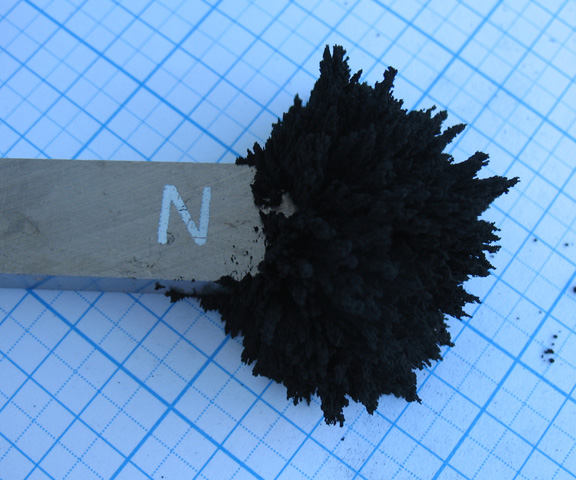
Synthetic Magnetite, FE3O4M1
FE3O4M1 Specifications
High purity Synthetic Magnetite also known as black iron oxide is a fine magnetic powder (2-4 um) widely used in industrial, environmental engineering, and manufacturing applications. It is widely used and preferred to natural magnetite due to the following reasons:
- Much higher purity
- Controlled particle size and shape
- Superior magnetic performance
- Consistent chemical reactivity
- Cleaner color and appearance
- Lower risk of contaminants
- Ability to engineer advanced materials
Applications:
Some of the major applications of synthetic magnetite are described below with some details and many examples:
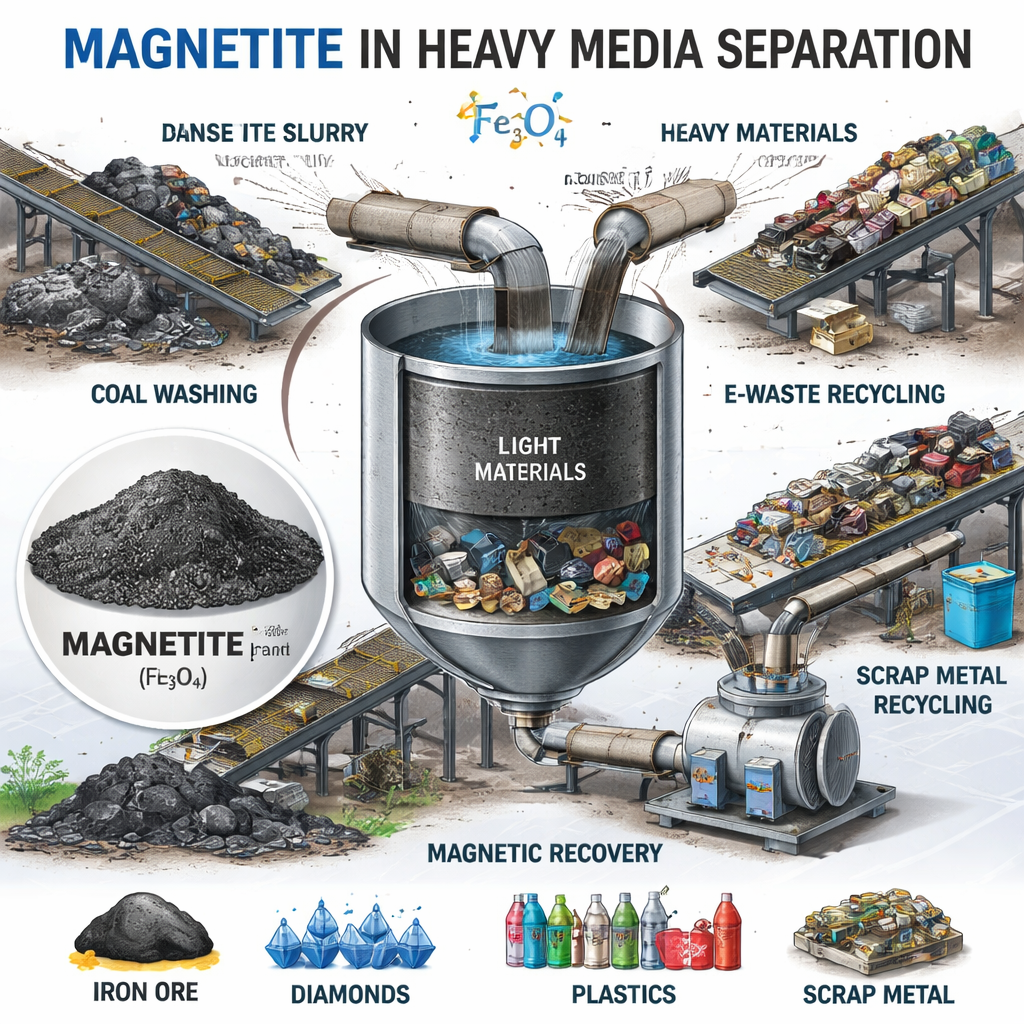
Heavy Media Separation (Mining & Recycling)
Magnetite powder is mixed with water to form a dense slurry used to separate materials by density.
Applications
- Coal washing (remove rock and ash)
- Iron ore beneficiation
- Diamond processing
- Scrap metal recycling
- E-waste separation
- Plastic recycling by density
Why 2–4 µm is ideal
- Suspends well in water
- Provides stable slurry density
- Easily recovered magnetically
- Lower viscosity than ultrafine powders
- Minimal settling compared to coarse particles
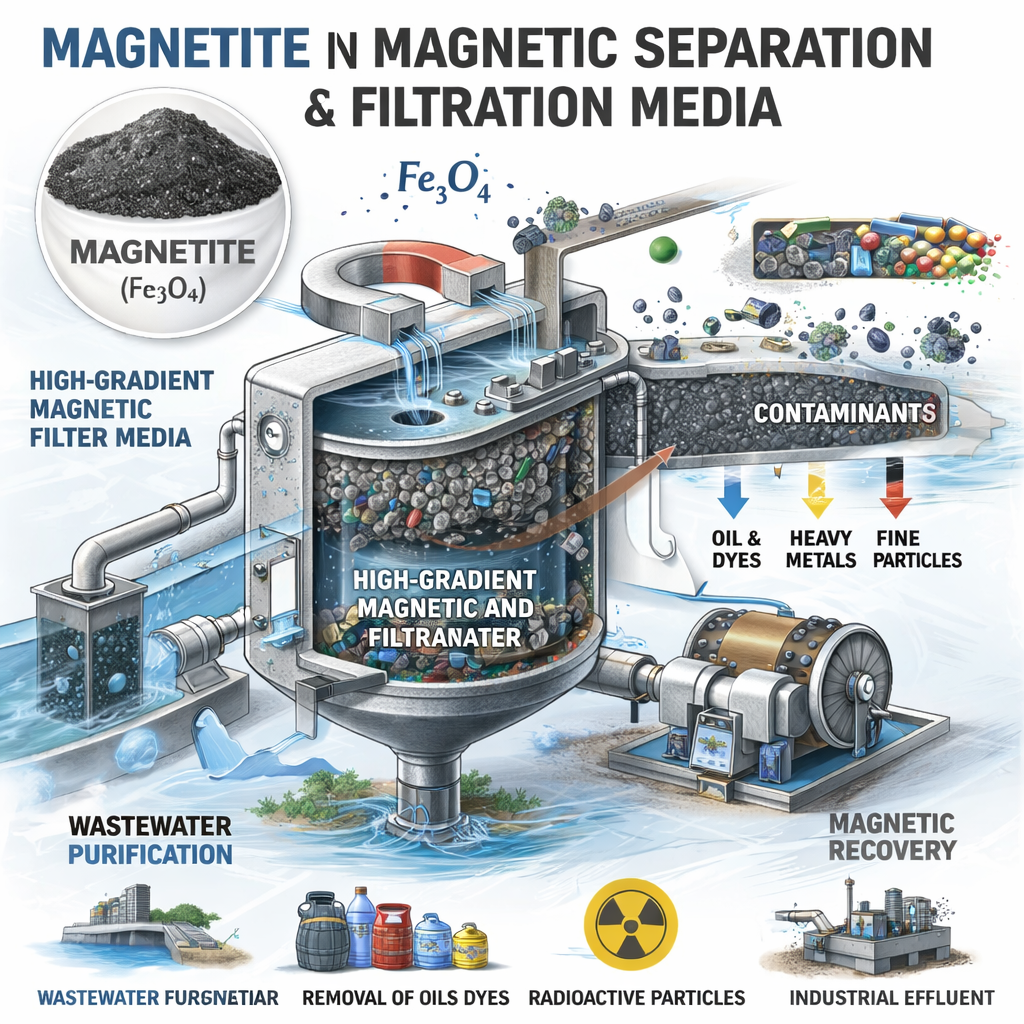
Magnetic Separation and Filtration
Magnetite particles can act as magnetically controllable filter media.
Uses
- Wastewater purification
- Industrial effluent treatment
- Removal of oils, dyes, heavy metals
- Radioactive particle removal
- Fine solids capture
Often used in:
- High-gradient magnetic separators
- Fluidized magnetic beds
- Magnetically stabilized filters
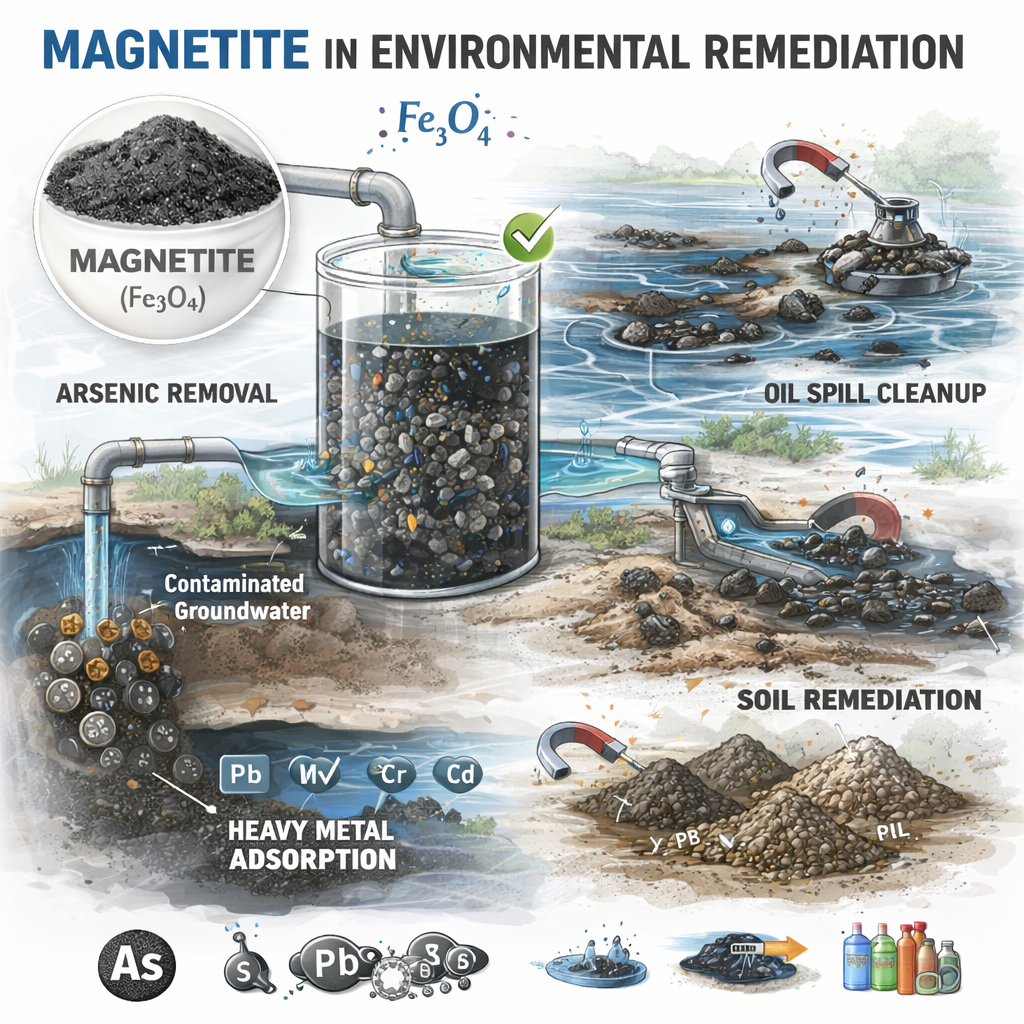
Environmental Remediation
Magnetite is chemically active and can bind contaminants.
Applications
- Arsenic removal from water
- Lead, chromium, cadmium adsorption
- Groundwater cleanup
- Oil spill recovery (magnetically assisted)
- Soil remediation
Compared with nanoparticles:
✔ Easier recovery
✔ Lower environmental risk
✔ Lower cost
✔ Suitable for packed-bed systems
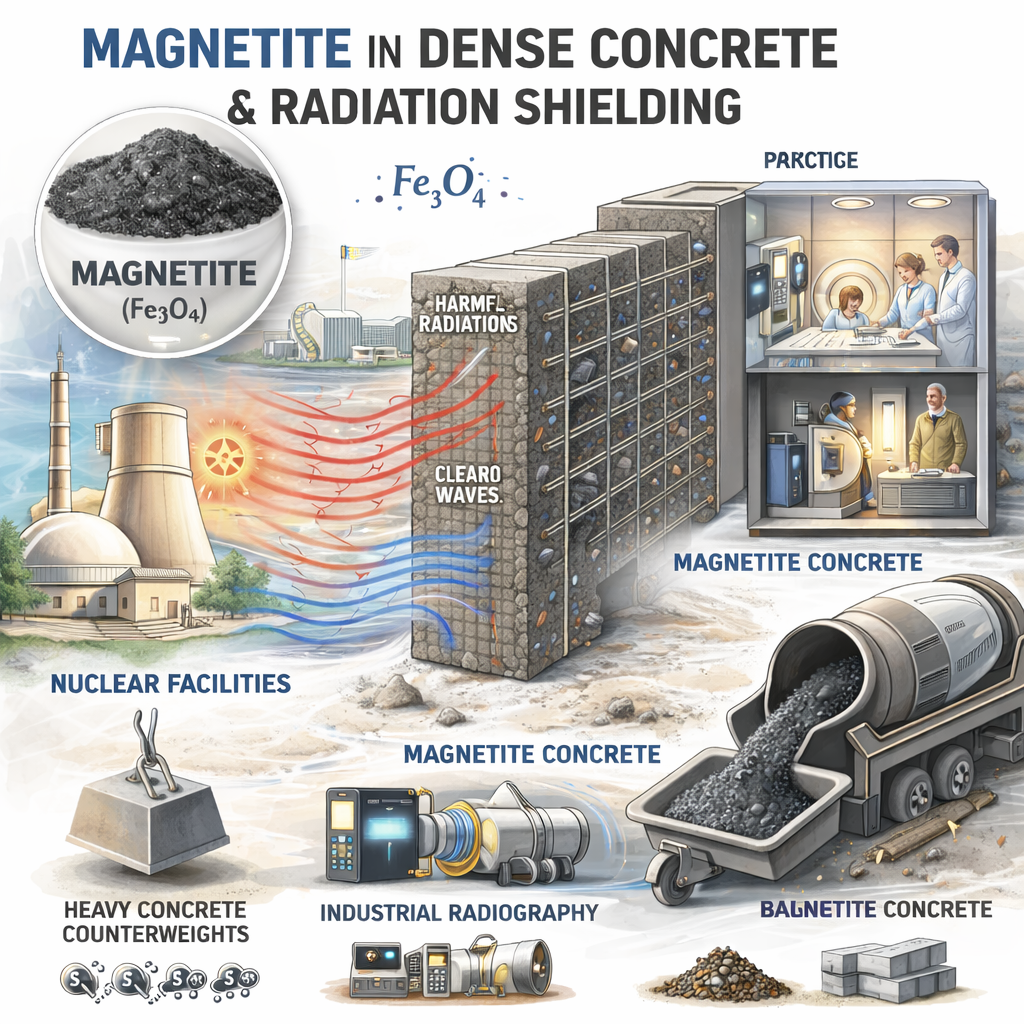
Dense Concrete & Radiation Shielding
Magnetite increases density of concrete.
Used in
- Nuclear facilities
- Medical radiation rooms
- Industrial radiography
- Counterweights
- Ballast materials
2–4 µm powder can serve as a fine filler to reduce porosity and increase density.
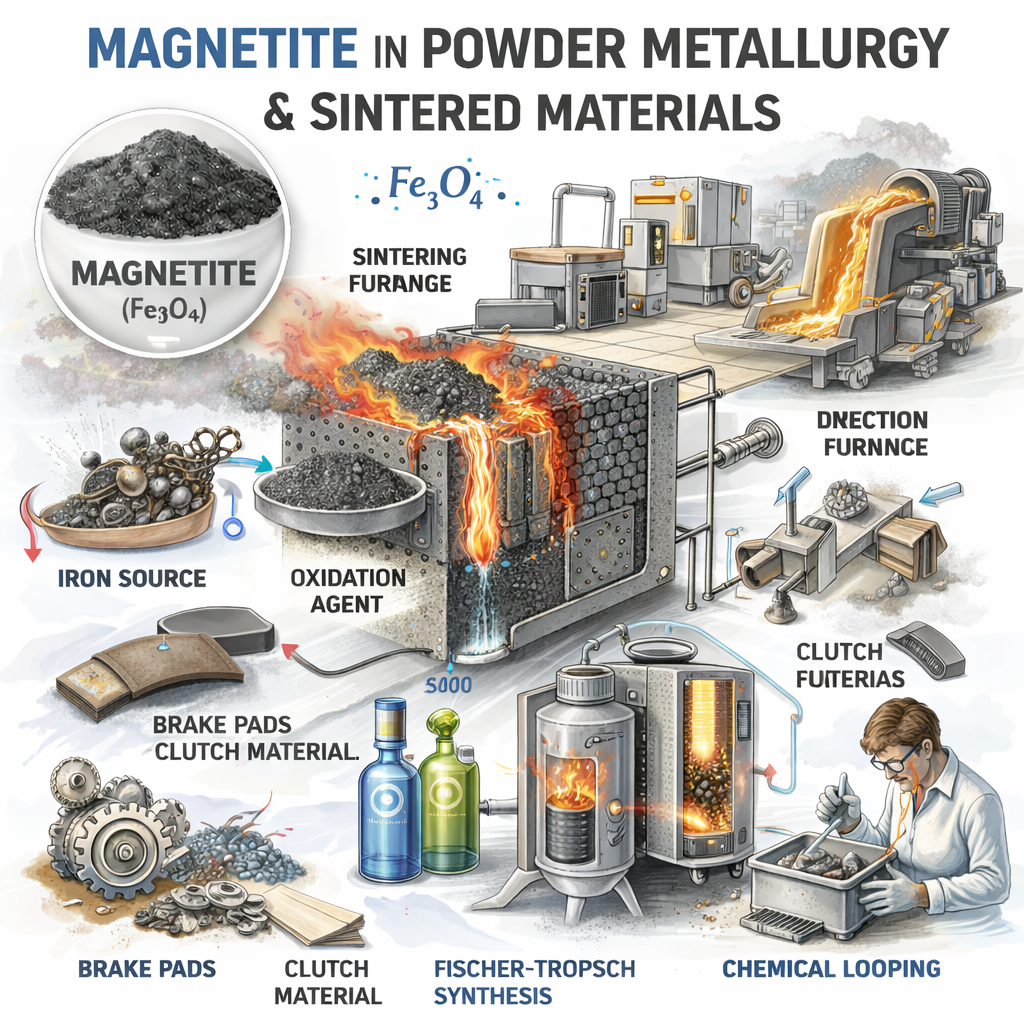
Powder Metallurgy & Sintered Materials
Magnetite can be used as:
- Oxygen carrier in sintering
- Iron source in reduction processes
- Component in friction materials
- Additive for magnetic metal composites
Examples:
- Brake pads
- Clutch materials
- Magnetic parts
- Iron production precursors
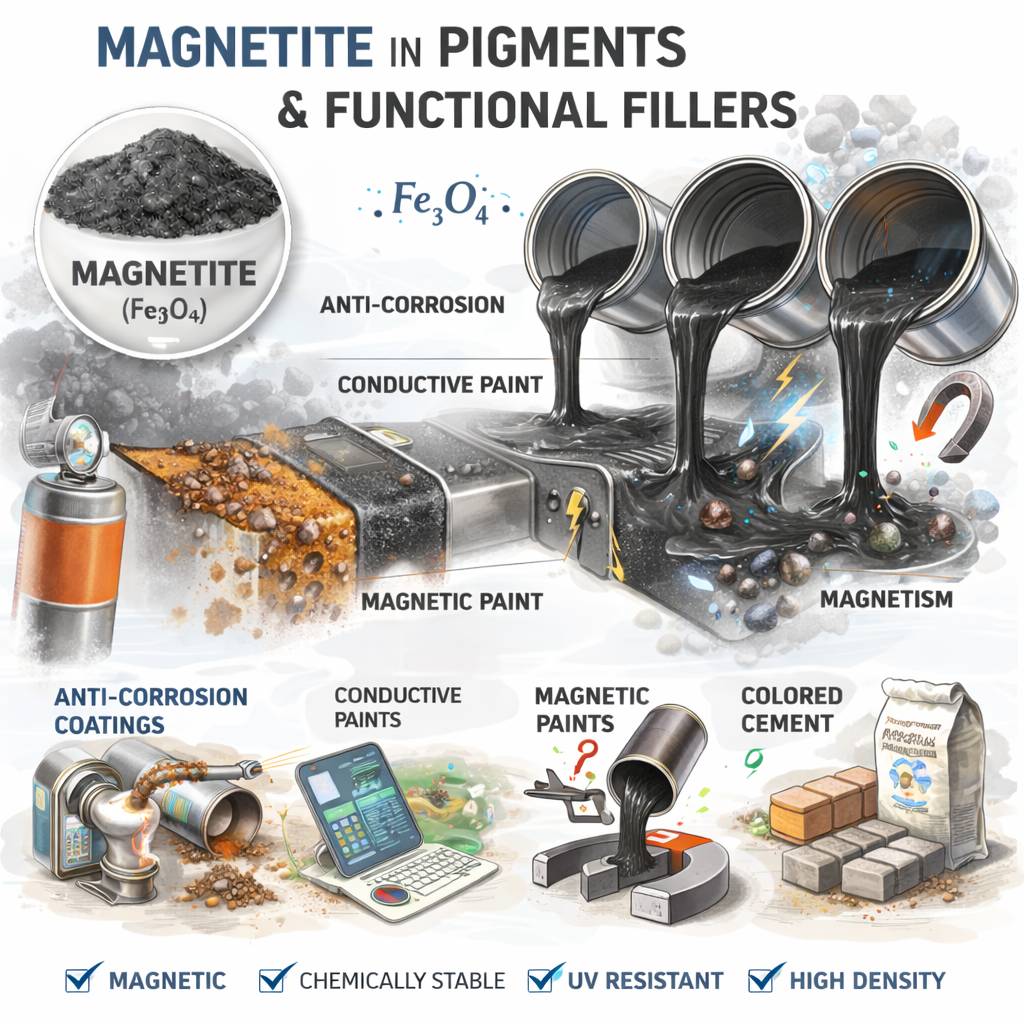
Pigments & Functional Fillers
Magnetite is a black iron oxide pigment with special properties.
Applications
- Anti-corrosion coatings
- Conductive paints
- Magnetic paints
- Industrial primers
- Toners and inks
- Colored cement
Advantages over carbon black:
✔ Magnetic
✔ Chemically stable
✔ UV resistant
✔ Non-flammable
✔ Higher density
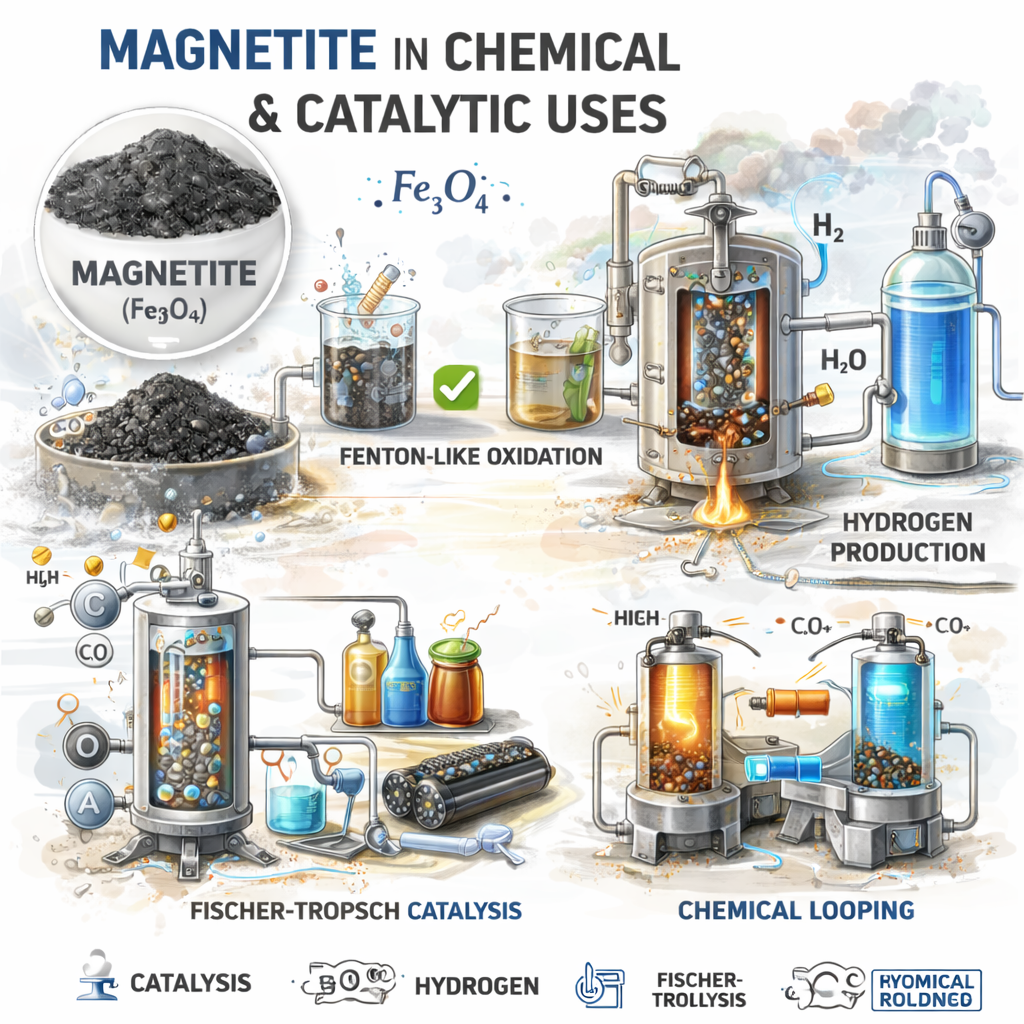
Chemical & Catalytic Uses
Magnetite can participate in redox reactions.
Examples:
- Fenton-like oxidation catalysts
- Hydrogen production research
- Fischer-Tropsch catalyst support
- Chemical looping processes
Micron size is often preferred for fixed-bed reactors.
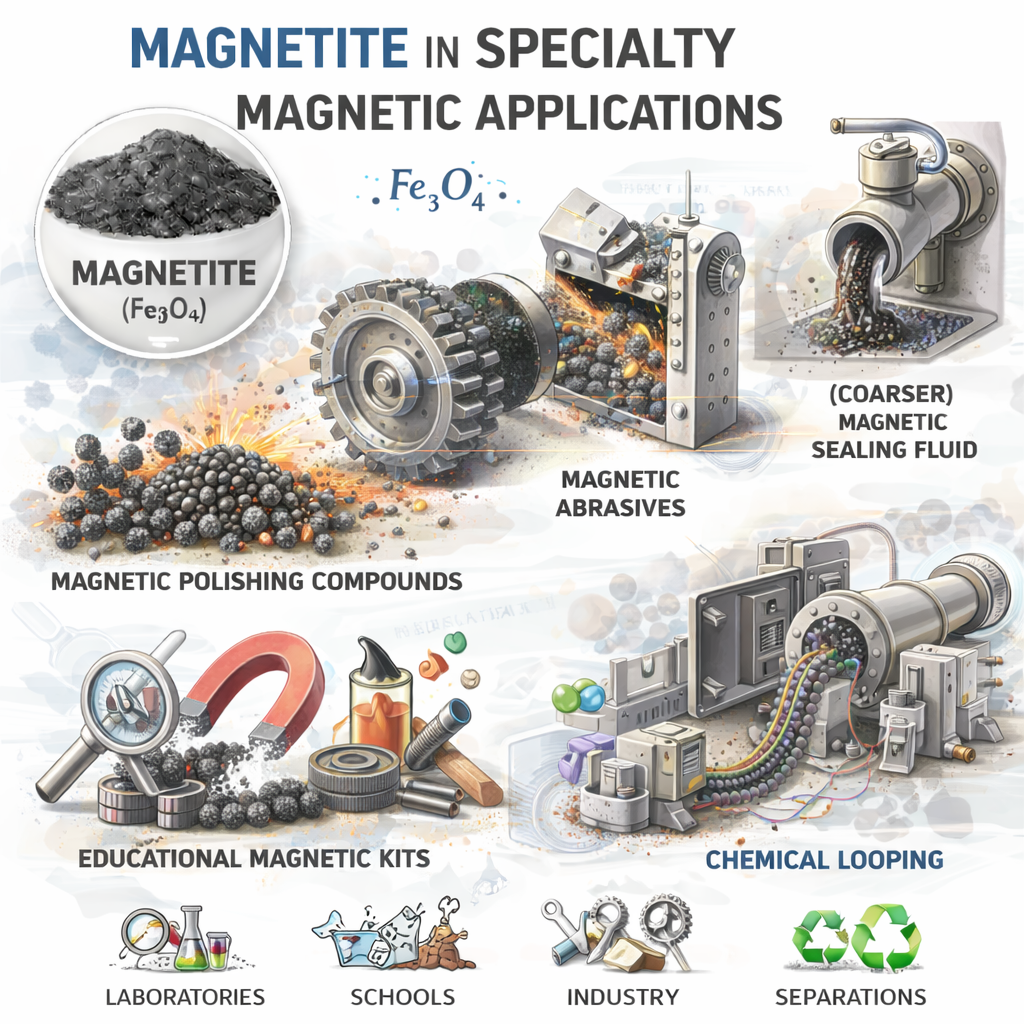
Specialty Magnetic Applications
While not biomedical grade (too large for injection), 2–4 µm magnetite is useful for:
- Magnetic polishing compounds
- Magnetic abrasives
- Magnetic sealing fluids (coarser types)
- Educational kits and demonstrations
- Magnetic tracers in industrial systems
Why 2–4 µm Size Is Special ?
Compared with other ranges:
Versus nanoparticles (<100 nm)
✔ Much safer to handle
✔ Not respirable to the same extent
✔ Easier filtration
✔ Lower cost
Versus coarse powders (>50 µm)
✔ Higher surface area
✔ Better suspension behavior
✔ Stronger magnetic response per mass
✔ Better adsorption properties
Chemical Composition:
| Typical | Spec | |
| Magnetite (Fe3O4) | > 99% | > 98% |
| Hematite (Fe2O3) | 0.5% | 0.0 – 0.1% |
| Wuestite (FeO) | 0.0% | 0.0 – 0.5% |
| Trace Elements | 0.6% | 0.2 – 0.1% |
Ordering and Pricing
Please contact 973-405-6248 to discuss your specific requirements based on your applications.