Contact: ☎ 973-405-6248 | ✉ sales@Iron-Powders.com

Iron Metal Clay
Short answer: yes, iron powder can be used to make a metal-clay-like material, but it behaves very differently from silver/bronze/copper metal clays, and there are some hard limits you should know up front.
I’ll break this down clearly and practically.
1️⃣ Is iron powder usable as metal clay?
Technically: yes. Practically: “with constraints.”
Iron powder can be formed into a clay using binders + water, shaped like metal clay, dried, and then sintered.
However:
- Iron oxidizes aggressively
- Iron requires much higher sintering temperatures
- It cannot be fired in air like bronze or copper clay
- Shrinkage and cracking are harder to control
So iron metal clay is more like powder metallurgy paste than hobby silver clay.
2️⃣ Why iron metal clay is harder than copper/bronze
| Property | Iron | Copper / Bronze |
|---|---|---|
| Oxidation | Very high | Moderate |
| Sintering temp | ~1200–1350 °C | ~800–900 °C |
| Atmosphere | Inert or reducing only | Often air (with carbon) |
| Color after firing | Dark gray / black | Metallic |
| Forgiveness | Low | High |
This means iron clay is better for industrial / experimental / sculpture work, not jewelry beginners.
3️⃣ Basic formulation: iron metal clay (binder-based)
Here is a workable baseline recipe.
🔩 Core ingredients
- Iron powder
- Preferably fine (<20 µm)
- Irregular particles sinter better than spherical
- Water (deionized preferred)
🧪 Essential additives (this is the key)
You cannot make usable iron clay with just iron + water.
A. Binder (mandatory)
Provides plasticity and green strength.
Common options:
- Methyl cellulose (very common)
- Hydroxypropyl cellulose (HPC)
- PVA (polyvinyl alcohol) – works, but burns dirtier
- Starch + cellulose blend (traditional PM paste)
Typical level:
- 1.5–3% binder (by weight of iron)
B. Plasticizer (strongly recommended)
Prevents cracking and improves workability.
Common choices:
- Glycerin
- Propylene glycol
- Sorbitol
Typical level:
- 0.2–0.5%
C. Anti-oxidation / firing aid (very important)
Iron oxidizes during drying and firing.
Options:
- Carbon black (0.5–2%)
- Activated charcoal (very fine)
- Graphite powder
- Stearic acid (very small amount)
These help:
- Reduce oxide formation
- Improve sintering
- Improve final density
4️⃣ Example iron metal clay formula (by weight)
| Component | % |
|---|---|
| Iron powder | 94–96% |
| Methyl cellulose | 2.0% |
| Glycerin | 0.3% |
| Fine graphite or carbon black | 1.0% |
| Water | As needed (usually 10–15% of dry mass) |
Consistency: stiff pottery clay, not slime.
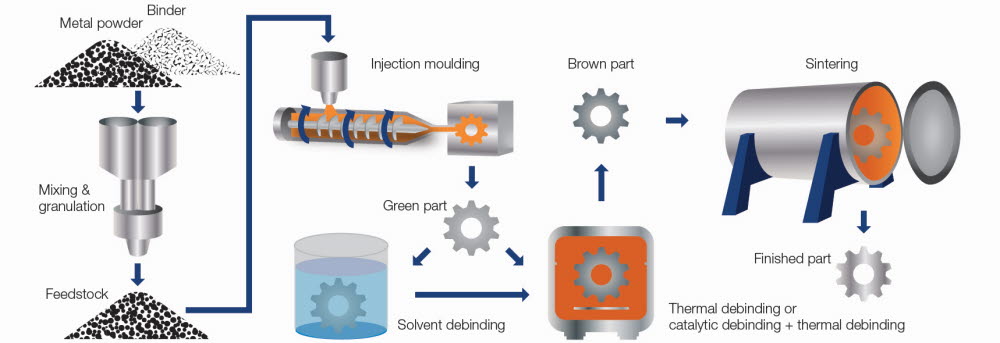
5️⃣ Processing steps (critical)
4
Step 1 – Mixing
- Dry blend iron + carbon + binder first
- Add water slowly
- Knead thoroughly (air bubbles are bad)
Step 2 – Shaping
- Hand sculpt
- Press molds
- Texture like normal clay
- Keep covered when not in use
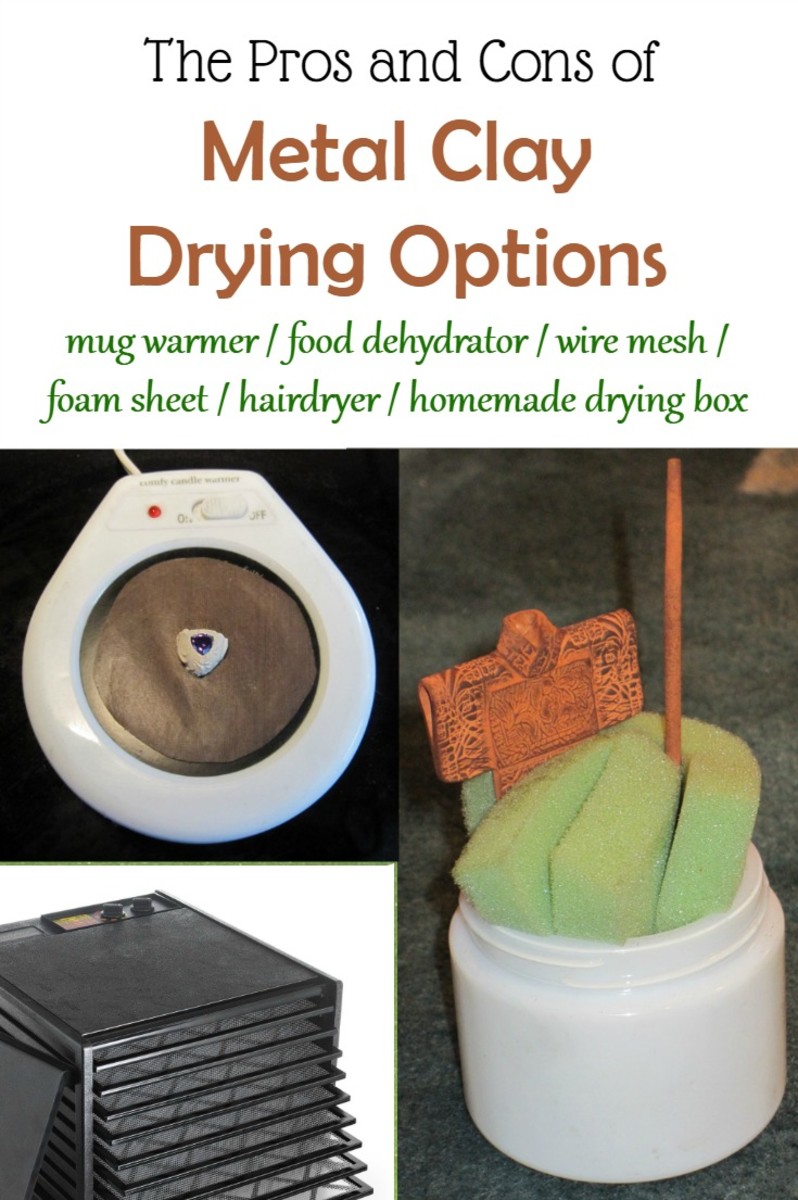
Step 3 – Drying
- Slow drying only
- Room temperature
- No heat guns
- No sun
- Cracking risk is high
Step 4 – Binder burnout
- Very slow ramp to ~400–500 °C
- Must avoid oxygen exposure as much as possible
Step 5 – Sintering (this is the deal-breaker)
You need one of the following:
- Hydrogen atmosphere furnace
- Argon / nitrogen atmosphere furnace
- Vacuum furnace
- Carbon-packed sealed container (advanced)
Typical sintering:
- 1200–1350 °C
- 30–90 minutes
❌ Not possible in a hobby kiln in air
6️⃣ What the final iron piece is like
- Dark gray / black
- Magnetic
- Strong but somewhat brittle unless well-sintered
- Can rust unless:
- Oil-treated
- Waxed
- Phosphated
- Clear-coated
7️⃣ When iron metal clay does make sense
✔ Industrial prototypes
✔ Educational metallurgy demos
✔ Sculptural objects
✔ Magnetic art pieces
✔ Powder metallurgy R&D
✔ Cold-cast hybrid systems
Given your background with iron nanoparticles, ferrofluids, and tin powder, this is very much in your wheelhouse — but it’s not a casual craft material.
8️⃣ If your goal is “iron-like” but easier
You might consider:
- Cold-cast iron resin (iron powder + epoxy/polyester)
- Bronze clay for form → iron plating afterward
- Iron powder + sodium silicate (ceramic-bonded composite, not true metal)
These give 80% of the look with 20% of the pain.
Bottom line
- ✅ Iron powder can be made into metal clay
- ❌ It is not beginner-friendly
- ❌ Requires controlled atmosphere sintering
- ✅ Needs binder + plasticizer + carbon
- ⚠ Oxidation control is the biggest challenge
If you want, next I can: